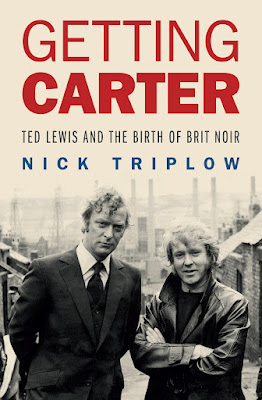
Hoo boy! Do I have a list of new classic film books for you! It took me a few weeks to gather this list and its finally here. I'm very impressed with what TCM/Running Press and University Press of Kentucky have coming up in their Fall catalogs. There are lots of good paperback editions of some big releases notably the Paul Newman memoir, the Elizabeth Taylor biography and Mark Vieira's George Hurrell's Hollywood.
Are you new to my list? Here are the details. The books include biographies, memoirs, scholarly texts, coffee table books and more from a variety of publishers. For any scholarly books I make sure the ones included are affordable. There are also some reissues and paperback editions added to the bunch. Publication dates range from July to December 2023 and these are subject to change. These are U.S. release dates. International release dates and availability may vary.
Links go to Amazon, Barnes and Noble and Powell's. I receive a small commission if you shop through some (not all) of my buy links.
I would love to hear what you think? Which books are you putting on your wishlist?
JULY
9780063026391
Bogie & Bacall
The Surprising True Story of Hollywood's Greatest Love Affair
“The film transplanted the dark urban environs of the city into the West’s iconography.... Akin to Chandleresque private detective or a returning WWII veteran trudging through the brick alleys and gilded neighborhoods of the apocryphal urban noir environment, Mitchum travels through a similarly alienating domain, where loyalties shift and things are assuredly not what they initially seem.” — Alan K. Rode
Robert Wise's Blood on the Moon (1948) has had a bit of a renaissance in recent years. It's come to be appreciated as a notable film of its era—one that strikes a perfect balance between its two genres: the Western and the Film Noir. Based on the novel by Luke Short, the film stars Robert Mitchum as Jim Garry, a gunslinger who is hired by his old buddy Tate (Robert Preston) to settle a dispute between Tate and a cattle rancher. Jim falls for the rancher's headstrong daughter Amy (Barbara Bel Geddes) and comes to realize that Tate is actually scheming to steal the rancher's cattle from under him. The story unfolds like a Film Noir detective story with a notable Western backdrop, a thrilling bar brawl and a climactic shoot-out.
In 2020 the Warner Archive Collection released a Blu-Ray edition of Blood on the Moon that garnered much excitement from the classic film community. In 2023the film was screened at the TCM Classic Film Festival to a packed theater. Blood on the Moon was introduced by film historian Alan K. Rode who recently published a book solely about the movie.
Blood on the Moon by Alan K. Rode is part of the University of New Mexico Press' Reel West series in which each book focuses on one particular film from the Western genre. This slim volume on Blood on the Moon offers readers an opportunity to learn about the background of the film, the key players involved and its place in film history.
The book manages to be comprehensive without bogging down the text with superfluous information. The introduction examines the context and importance of the film. The following chapters details the pre-production, in-production and post-production life of Blood on the Moon while giving the reader background on the notable individuals involved. We learn about the author of the original novel, Luke Short, screenwriter Lillie Hayward, home studio RKO, director Robert Wise, cinematographer Nicholas Musuraca, actors Robert Mitchum, Barbara Bel Geddes, Phyllis Thaxter, Robert Preston, Walter Brennan and more.
Some interesting facts from the book:
The title Blood on the Moon is a reference to a “hunter’s moon” which appears red or to a total lunar eclipse. It “has been considered a foreboding signal or a portent of doom.”
One of the last movies green-lighted for RKO by Dore Schary before Howard Hughes took over.
The movie rights to Luke Short's novel Gunman's Chance were bought by RKO. It wasn't developed until director Robert Wise and Theron Wrath came across several versions of the script in the story department and realized that it " a viable film property that had been mishandled by RKO.”
"Preston and Mitchum were a simpatico team who worked well together and enjoyed playing practical jokes on Barbara Bel Geddes and Phyllis Thaxter.”
“The leading actors were selected by Dore Schary, but Wise cast all the supporting players…”
The film had a bigger budget than other Westerns produced by RKO. It still went over budget due to inhospitable weather.
Author Alan K. Rode's Reel West: Blood on the Moon is an informative and engaging read. This concise book gives the reader plenty to chew on without overloading them with too much research. I recommend this book only to readers who are familiar with the movie as you'll need knowledge of the plot and the key players in order to appreciate the information presented to you.
Ever since I started following makeup artist and historian Erin Parsons on TikTok (watch her full-length vintage makeup collection tour on YouTube, it’s amazing!), I’ve been interested in learning more about makeup in old Hollywood. So when I saw that Rutgers University Press was publishing Adrienne L. McLean’s new book on studio era makeup and hairdressing, it was a no brainer that this book would find its way into my research library.
All for Beauty: Makeup and Hairdressing in Hollywood’s Studio Era by Adrienne L. McLean is a scholarly text that examines the business of makeup and hairdressing within Hollywood (silent film era to the late 1960s), the emergence of artists within the industry and the techniques implemented. McLean primarily focuses on “straight makeup” which is to say it excludes costume makeup that is made to exaggerate, depict a historical period or to transform an actor into a fantastical creature. We’re talking foundation, blush, lipstick, eyeliner, mascara, false eyelashes, some contouring, body makeup. Hairdressing is less of a focus but the author does examine the use of wigs in film and how some of the top makeup artists began as wigmakers.
McLean’s book is heady stuff and not a light read. If you're interested in the subject matter, I recommend reading the book a little differently. The final chapter Cosmetics, Coiffures, Characterization is the one you should start with first. This is where movie star makeup is examined at length in terms of intent, method and end result. Then if you find yourself wanting more information on the business side of things or want to learn about the individual artists, then read the introduction and first two chapters.
The author’s intent with the book was to examine, in her words, “why people in studio-era Hollywood movies, usually but not always stars, look so unnaturally perfect on the screen.” Starting in the silent era, there was a pushback against exaggerated makeup on screen. There was a shift towards a more natural look but one that depicted an actress (and actors too) as perfectly flawless. McLean also discusses at length how patriarchy, capitalism, sexism and racism were the strongest forces behind makeup and hairdressing as a business and as a science in the industry. Key figures include: Max Factor, the Westmores, Sydney Guilaroff, Vic Meadows, William Tuttle, Robert Stephanoff, Dot Ponedel, Jack Dawn, Ben Nye, etc.
There are a numerous color and black and white photographs throughout as well as some makeup charts from specific movie productions. It’s a relatively short book at around 300 pages (229 pages of actual reading material before you get to the backmatter). But it's quite dense as its packed with lots of information.
Here are some interesting quotes from the book:
“Motion pictures are often invoked as major factors in turning ordinary women’s cosmetic use into normative, indeed indispensable, components of public femininity rather than signs of moral looseness or depravity.”
“any application of color or shading was likely to read as a dark blotch or a stark line. Filmmakers working with orthochromatic were therefore unable to employ either foundation or rouge to represent basic states like robust health, a tan, youth, or a bloom on the cheeks. (As Kevin Brownlow remarks, silent actors are ‘strangely pale; there are no olive skins or tanned complexions’ because of the amount of greasepaint and powder used.)”
Robert Stack wrote in his autobiography “of the efforts studio head Jack Pierce and the ‘makeup boys’ at Universal made to turn him into a ‘young Robert Taylor’ for his first starring role, opposite Deanna Durbin, in 1939, which included darkening and straightening Stack’s hair and giving him a hair lace widow’s peak.”
“Lauren Bacall, a former model, had to elicit Howard Hawks’s help to keep Perc Westmore from straightening her teeth, plucking her eyebrows, shaving her hairline and in general ‘redesign[ing her] face’ for her first test in 1943 for To Have and Have Not.” [Hawks wanted her exactly as she was.]
“It was the first stop of the day for most if not all Hollywood actors and makeup artists and hairdressers became some stars’ trusted, and often influential, friends and companions. This was certainly the case with Rita Hayworth and Robert Schiffer and hairdresser Helen Hunt; Barbara Stanwyck and her hairdresser Hollis Barnes; and Marlene Dietrich, Joan Blondell, and Judy Garland and Dot Ponedel.”
“According to [Donald] Bogle, actor Herb Jeffries, who ‘had experimented with makeup for Black Americans,’ also had a substantial impact on the looks of [Lena] Horne and Dorothy Dandridge in their films and personal appearances, although white makeup artists worked on both.”
Cary Grant made himself very tan so he could avoid the use of cosmetics for his films. For North by Northwest (1959), “Eva Marie Saint had to wear foundation, according to [makeup artist William] Tuttle, ‘probably two or three shades darker than we’d put on the average man to get a closer relationship between the two.’”
"[Esther Williams] had to look perfectly groomed underwater as well as on dry land… The body makeup that WIlliam Tuttle eventually settled upon for Williams, a mica-laced powder with the salubrious name of Texas Dirt… Ultimately simple Vaseline mixed with baby oil (Sydney Guilaroff later claimed it was olive oil) was used for the maintenance of her hair in studio tanks and pools."
“One of the most famous of Lena Horne’s stories about her early days at MGM in the 1940s has to do with the Max Factor company’s development of a ‘Light Egyptian’ Pan-Cake especially for her (there were other shades of ‘Egyptian’ as well), which Horne claims was instead used on white actors (like Ava Gardner as Julie LaVerne in Show Boat) who were taking roles that Horne herself was not allowed to play."
“The long scar on her left cheek that Carole Lombard suffered as the result of a 1926 automobile accident was acknowledged in interviews and fan magazines at the time, but disguised by makeup as well as careful framing in her films and publicity photos.”
In Mary Astor’s book A Life on Film she wrote “There was eyebrow shadow, brown, and mascara, black and then something that was called ‘cosmetique,’ a black cake of guck that was melted over a spirit lamp and then applied to the ends of the eyelashes with a match or a toothpick. This was ‘beading’: It accomplished what false eyelashes do today…”
“For more than four decades, the statuesque funny lady played the role of an austere dowager and grande dame of the social set on stage and screen... Margaret [Dumont] suffered each insult or physical assault with a classic assurance that made her the greatest grande dame in the history of filmed comedy.” — Chris Enss and Howard Kazanjian
The Marx Brothers had a winning formula for their success as a comedy team. Each brother had their own individual persona and when put together with their physical antics and whip smart verbal jabs—they really had some of the best comebacks of all time—they created this magnificent maelstrom of chaos that left audiences in stitches. Before making a movie, they'd take their story concept to the stage to perfect their antics before a live audience. By the time the cameras started rolling, they were primed and ready to make movie magic. But one of the most important elements of their formula was having a straight man or lady. Whether it was their brother Zeppo Marx or a comedienne like Thelma Todd, their performances were enhanced by the presence of someone who could keep their composure. Arguably their best comedic partner was Margaret Dumont, a talented actress who excelled at this role and became an important member of the Marx Brothers troupe.
In their book Straight Lady: The Life and Times of Margaret Dumont, "The Fifth Marx Brother", authors Chris Enss and Howard Kazanjian make the case that Margaret Dumont not only played a pivotal role in the Marx Brothers' success but that her own success was intrinsically tied to theirs. Dumont and the Marx Brothers had a sort of symbiotic relationship and while they would work on projects separately, there some something special about their collaborations.
This biography is fairly short with about 159 reading pages. It's clear that there isn't that much information about Margaret Dumont and the authors did a great job filling in the timeline with interesting information about the Marx Brothers and the movies they made with and without Dumont. It reads very much like a Dumont-Marx biographical hybrid.
Here are some interesting facts about Margaret Dumont from the book:
She changed her name from Daisy Juliette Baker to Daisy Dumont and eventually to Margaret Dumont. Her past was riddled with scandal—she was born out of wedlock and the result of an extra marital affair—so changing her name was crucial if she was going to have any success in the theater. She changed Daisy to Margaret when she graduated from ingenue roles to dowager ones.
She briefly gave up acting when she married John Moller Jr. and became a society woman. He died in 1918 during the influenza pandemic and after his death she returned to the stage.
After the success of The Cocoanuts (1929) and Animal Crackers (1930), the public became convinced that Margaret Dumont was secretly married to Groucho Marx and the two had a difficult time trying to dispel the rumor.
Dumont suffered many injuries as a result of the Marx Brothers' physical antics. She was notably injured during the making of Duck Soup (1933) and by the time she made A Day at the Races (1937) she wore a harness "to prevent from having her ribs broken."
The Marx Brothers loved to pull pranks on Dumont off-screen. In one instance, they went too far when they called the cops to report Dumont was working as a hotel prostitute. After the incident, Groucho Marx apologized to Dumont and promised that they'd never do anything to hurt her again.
Margaret Dumont was passed over for several Marx Brothers pictures. Most notably for Go West (1940) because the thought was that a Western setting wouldn't suit her established persona of a society woman.
Dumont collaborated with many comedians including W.C. Fields, Danny Kaye, Laurel and Hardy, Red Skelton and Jack Benny. She was permanently typecast as a straight lady and "pompous dowager" despite her great range as an actress and singer.
Groucho Marx and Margaret Dumont reunited for a skit on a TV variety show in early 1965. Dumont died shortly after this reunion and their episode aired one month after her death.
Straight Lady: The Life and Times of Margaret Dumont, "The Fifth Marx Brother" is an enjoyable read and recommended for Marx Brothers enthusiasts who want to know a bit more about Dumont. The book is very matter-of-fact and it's straightforward and simplistic approach will appeal to readers who want to focus on the information rather than read something with more editorial interjections. The edition I read was a slightly oversized but slim hardcover edition with a beautiful dust jacket and plenty of black-and-white photographs within.
Thank you to Lyons Press for sending me a copy of this book for review.
"Lost in a world of swirling fog and crashing wave, a world empty of all but these things and his grief and the keening of the fog horn far at sea. Lost in a lonely place..." — Dorothy B. Hughes
The 1950 film adaptation of Dorothy B. Hughes novel In a Lonely Place is one of the most celebrated entries into the film noir canon. Bolstered by Nicholas Ray’s direction and Humphrey Bogart and Gloria Grahame’s excellent performances, In a Lonely Place (1950) is a tense and ultimately terrifying story of a writer’s downward spiral. Bogart plays Dix Steele, a Hollywood screenwriter working on his next adaptation. He hasn’t had a hit movie in a long time and the pressure from his agent Mel (Art Smith) and his own internal pressure as an artist is starting to get to him. When hat check girl Mildred (Martha Stewart, no not that one, the other one) is brutally murdered, Dix becomes a suspect having been the last one to see her alive. On the case is Dix’s war buddy Brub (Frank Lovejoy) and Captain Lochner (Carl Benton Reid). While the investigation is happening, Dix starts to fall for his neighbor, actress Laurel Gray (Gloria Grahame). Their romance is plagued with the tension caused by the investigation, Dix’s manic fits of creativity, his need for control and the threat of violence that lays under the surface. The situation is volatile and Laurel is in constant danger. Is Dix really the murderer? Or is he just falling apart with the suspicion hanging over his head?
The film noir adaptation is so vastly different from Dorothy B. Hughes’ novel that reading the book and watching the movie will make you feel like you just experienced parallel universes. The novel is narrated in the third person omniscient point of view. However, the narrator never strays from Dix giving the reader the perspective of the serial killer. And yes, he is a serial killer. It’s known from the very beginning of the novel that Dix Steele is a former airman who fought during WWII. He found an opportunity to live in his friend Mel Terriss’ (not his agent like in the movie) apartment. Mel’s absence is explained away by Dix as him having traveled to Rio de Janeiro for a job but the reader knows something is up. Dix has been killing one woman a month. He stalks vulnerable young women at night, lures them to an isolated spot and strangles them. The book goes into detail about how Dix hunts his prey but spares us the bloody details of the actual crimes.
The irony is that Dix’s war buddy Brub is a police detective investigating the string of murders. Dix is pretends to be a crime writer and this affords him access to particulars of the investigation. The pretense is that Dix needs material for his work but really Dix is gaining knowledge on how best to get away with future crimes. Brub’s wife Sylvia is one of the most important characters in the story. In the film, Sylvia (Jeff Donnell) is a minor character, one who frets over her husband’s work and triggers one of Dix’s outbursts when she reveals something she wasn’t supposed to. In the novel however, she is the first person to suspect Dix and works diligently to lure him in, study him, gather materials for the case. She’s more effective as a detective than her actual detective husband Brub. The film did this character dirty!
(Jeff Donnell as Sylvia and Gloria Graham as Laurel)
The Brub character is the polar opposite of Dix. He feels that his war experience has led him to want to help people. He’s devoted to his work and is for the most part a gentleman (except for his overt lust for other women including Laurel Gray). Dix is a sociopath whose war experience may have given him a taste for blood. He’s also incredibly lonely and isolated which is really key to his character and to the title of the story. Dix spends a lot of time doing solitary things: driving, hanging out at the beach, stalking his prey, etc. In the movie, Dix is a hardworking screenwriter. In the novel, Dix pretends to write but really doesn’t want to work at all. He doesn’t understand why he can’t live off a trust like his friend Mel or why his rich uncle Fergus won’t give him more money. When actress Laurel Gray comes into his life, he begins to imagine what it would be like to have a long-term relationship with a woman he doesn’t hunt and kill. She reminds him of a long lost love and the calmer days before his killing spree.
Laurel Gray is probably the best represented in the film. Gloria Grahame captures Laurel’s ambivalence about the movie business, her attraction to Dix and her growing suspicion of Dix. In the movie, she’s much more a victim of domestic violence. She suffers as Dix becomes more and more controlling. In the novel, she’s not in love with Dix at all. She recognizes that they’re both similar in their selfishness but that they are meant to be together for a good time not a long time. She says to him:
“I knew you from the first time I looked at you just like you knew me. Because we’re just alike. We’re out to get it, and we don’t care how we get it."
Laurel and Sylvia are both objects of Dix’ lust and are both key to his downfall. I really enjoyed how Dorothy B. Hughes approached the psyche of her serial killer protagonist and the women in his orb. Laurel and Sylvia are the heroes in the novel. As they slowly draw away from Dix, we feel the tension and know that something big is about to happen. The authorities are only effective once both women have done the work on their end. Otherwise Dix might have kept going.
Dorothy B. Hughes was a fantastic writer. I enjoyed how she describes the fog, the beach, Dix’s isolation and loneliness and how the reader has to pick up on subtle clues outside of Dix’s point of view. Here are some of my favorite quotes from the book:
"Why hide this beautiful creature under the blanket of your indifference?"
"There was a save delight in being a lone wolf. It wasn't happiness.. He was a lone wolf; he didn't have to account to anyone nor did he intend to."
"She was greedy and callous and a bitch, but she was fire and a man needed fire."
"This was the beginning of something good. So good that he was enjoying its immediacy without thought, without plan. She was beside him, that was enough. He had needed her for so long a time. He had always needed her. It was a dream. A dream he had not dared dream, a woman like this."
I highly recommend reading In a Lonely Place by Dorothy B. Hughes. If you’re worried it will ruin the movie for you, don’t! The two stories are so different. There is no way they could have stayed true to the novel and pleased both Columbia Pictures and the Production Code Administration. Both can be thoroughly enjoyed as two separate art forms.
Have you read In a Lonely Place? What are your thoughts on how the changes they made from the movie?
June 2023 marks the 10th anniversary of Undercrank Productions, a DVD distributor founded by silent film accompanist Ben Model. I've had the privilege to interview Ben Model at the TCM Classic Film Festival a few years ago. And now he's back with an interview for Out of the Past.
Check out my interview below. And if you're interested in buying some DVDs, Undercrank Productions titles are discounted on Critics Choice Video, Deep Discount and Movies Unlimited for a limited time.
Raquel Stecher:I really enjoyed your recent performance at the 2023 TCM Classic Film Festival for the Rin Tin Tin movie Clash of the Wolves (1925). It was a festival favorite for sure! Can you tell me a bit about how you became a silent film accompanist?
Ben Model: I got my start accompanying films while I was a film production student at NYU. I was a big silent film fan growing up, and also played piano. The first semester of the basic overview film history course we all took Freshman year was silent films. And I do mean silent – these were screened in 16mm prints that had no soundtracks. I don’t know what possessed me but the next year I volunteered to play for the silent film screenings, and found myself playing for 2 or sometimes 3 classes a week. I made a point of meeting film accompanists in NYC to get advice. William Perry – who was MoMA’s film pianist 1969-1982 and scored films for “The Silent Years” on PBS – was a big help. Lee Erwin, who was the organist at the revival theater “The Carnegie Hall Cinema”, became a friend and mentor – Lee had been a movie theater organist in the 1920s
Still from Clash of the Wolves (1925)
TCM's Jacqueline Stewart with Ben Model at the 2023 TCM Classic Film Festival
Raquel: Congratulations on the 10th anniversary of Undercrank Productions! How did your label come about and how did you come up with the name?
Ben: A few things I was interested in kind of came together at the same time. I was looking for a way to do more scoring for silent films on home video than I was being hired to do already, I was interested in the process of how DVDs get made and released, and I was looking at ways of getting some obscure and rare silent comedy shorts I owned in 16mm out to fans who’d want to see them. During 2012, I figured out the various pieces of how this could happen, and also became aware of Amazon’s just-launched manufacture-on-demand DVD platform. Around the same time, I learned about Kickstarter, which had only been around for a couple years, and realized that involving fans of silent films in the process by crowdfunding my first DVD project, that would take care of the production costs. I’m pretty sure the Kickstarter I did to produce and release Accidentally Preserved was the first time this had been done with a silent or classic film home-video release. The whole thing worked, and I kept doing one or two of these every year.
The name comes from my fascination with the way undercranking was used and utilized throughout the silent film era and was a ubiquitous part of the movie-making process for the camera operators and the performers. I thought naming my DVD company “Undercrank Productions” would help promote awareness of this. I also was looking for a name that had a few of “K” sounds in it.
Raquel: How have you used Kickstarter as a platform to help create awareness and fund your projects?
Ben: I’ve found Kickstarter to be a great way to democratize the process of funding these projects. For the video I made for my 2nd or 3rd Kickstarter I came up with the tag-line, “Why not be part of the ‘someone’ in ‘why doesn’t someone put that out on DVD?’”. I try to emphasize the fact that if we all get out and push, we can make this happen. Ten years ago, it felt a little funny to be going hat-in-hand on social media, but by now – even 5 years ago – I think everyone gets it.
Raquel: What is the workflow like for your releases in terms of curation, restoration, accompaniment and distribution?
Ben: If it’s a disc of comedy shorts, Steve Massa and I start with picking an overlooked or forgotten comedian and then seeing if there’s enough of their films extant and available – through collectors or, more often, from the Library of Congress – to fill up a disc. Sometimes we’ve been able to add to a playlist of shorts with a title that we’d get, through the Library of Congress, from MoMA or the EYE Filmmuseum. We’ll screen the material for completeness and image quality and make a decision from there. Because these are fan-funded, manufacture-on-demand projects, that takes the issue of whether or not we’re going to sell 1000 or 2000 units off the table. Who the heck is Marcel Perez? Or Alice Howell? Nobody knows or remembers them, but that doesn’t matter. Once I have the funding from the Kickstarter, scans are ordered from the Library of Congress, and I get high-end video files of the film or films.
If the Kickstarter campaign goes way way over the funding goal, then there’s a budget for digital restoration. Then there’s inter-title recreation, if needed. Then the restored version of the files get graded, which means someone goes shot by shot and corrects exposure, and will also reinstate color tinting if we know what it was supposed to be originally. Once we have the final version of the restored film, then I create a screener for myself, and create the scores on either piano or theatre organ.
Once I’m at that phase, Marlene Weisman begins work on the graphic design of the Blu-ray and DVD case. She is beyond fantastic, and I think the artwork on a release is crucial. It’s your first line of defense online, and makes an important impression – just because a release is self-published it doesn’t have to have a self-published look to it. Once all the video and audio pieces are done, then the “authoring” happens, when the files get woven into something that can be burned into a disc and play in your physical media player.
For distribution, I’ve been using Alliance Entertainment to do all the manufacturing, order fulfillment and online listings on the various platforms like Amazon and DeepDiscount, et al. The final files and graphics get uploaded to Alliance, and I set the street date. I write a press release and send it out to my press list, and we mail out copies of the finished disc to reviewers… and hope for the best.
Raquel: Tell me about your partnership with the Library of Congress and your Found at Mostly Lost series.
Ben: Rob Stone, who is a Curator in the Moving Image Section of the Library of Congress’ National Audio Visual Conservation Center, came up with the idea of doing this. He’d worked out a co-branding deal with Kino Lorber in 2012 for their release of King: A Filmed Record... Montgomery to Memphis. I’m one of the resident silent film accompanists at the NAVCC’s Packard Campus Theatre, and am down in Culpeper VA for a show a handful of times a year. I was set to Kickstart and produce my 2nd project, The Mishaps of Musty Suffer (1916-1917), a slapstick comedy serial, and Rob got the idea to apply what had been done with Kino with me and Undercrank Productions. It meant I’d have to put the Library of Congress’ logo at the head of the film and on the DVD case, which was a huge plus for me. I had no name recognition, but the LoC sure did.
Anyone can pay for scans of films from the Library, as long as they’re public domain films and have no donor restrictions, and get them as files or on a disc. My co-branding relationship with the LoC allows me to do a slightly deeper dive into the collection when I’m considering a film or bunch of shorts. It’s made it possible for me to release silent films that the more established labels might not be interested in, which is a win for the Library as it helps get films they’ve preserved and worked on get out that ordinarily wouldn’t see the light of day.
The two Found at Mostly Lost DVDs are actually comprised of films that were identified at the “Mostly Lost” film identification workshops held at the Library of Congress in the 2010s. These films had been scanned and scored for a DVD included in the “swag-bag” attendees got each year. My idea was to make these available for the general public, for the folks who were interested. The workshop hasn’t happened for a few years, due to the pandemic, and while there aren’t any concrete plans for when it will happen again, I’m hoping that it’s just hibernating and will resurface in the next year or so.
Raquel: You've done a great job releasing the lesser known work from some key figures from film history including Lon Chaney, Marion Davies, Frank Borzage and Edward Everett Horton. Why is it important that these rare silents be preserved and shared with silent film enthusiasts and beyond?
Ben: The silent movies I release, thankfully, have already been preserved by the film archives. I feel like my role in the overall process is one of feeding and enriching the interest and fandom of silent cinema, including my own, by helping to fill out the landscape of silent cinema beyond the “usual suspects” tentpole films. These are the movies everyone went to see and enjoyed back in the silent era while they were waiting for the next Mary Pickford or Harold Lloyd film to be released.
Raquel: Is there one release that you're particularly proud of?
Ben: It’s hard to pick just one. But I’m really pleased with what we’ve done to make the films of comedian Marcel Perez available. Steve Massa got me interested in these, and they’re all excellent comedies. Perez was one of the many comedian-filmmakers of the silent era, physical comedians who also had a unique and recognizable directorial style. His own grandchildren–who Steve had connected with– had never seen Perez’s films and believed them to be lost. Most of his U.S.-made films are missing and we’re hoping more of them turn up so we can do a third volume.
Raquel: I really loved The Alice Howell Collection! Can you tell me more about how you came to curate and release that collection?
Ben: We have Steve Massa once again to thank for this project. Alice Howell is on the cover of his book Slapstick Divas, which is a huge book all about the women of silent film comedy. The more of her films we tracked down, watched, and showed in film programs we worked on, the more I thought a DVD of her films needed to happen. She starred in her own series of comedy shorts for about ten years and was popular and successful. You can see a link – even if it’s one you’re threading yourself – from Alice Howell to Lucille Ball to Carol Burnett and onward. She’s also got an important Hollywood legacy: her daughter married film director George Stevens, and her grandson George Stevens, Jr. is a filmmaker, founder of the American Film Institute and is co-creator of the Kennedy Center Honors. The Alice Howell DVD wound up being a 2-disc set, and was another Undercrank Productions release that was done through my co-branding arrangement with the Library of Congress.
Raquel: During the early days of the pandemic you and Steve Massa started The Silent Comedy Watch Party series which now has over 90 episodes on YouTube. Can you tell me how this came about?
Ben: I’d had the basic concept for this for a few years. Somewhere here I have a drawing I made of how the equipment and the piano would be set up. The second week of March 2020 we all knew something was coming and we didn’t know what, but things were beginning to close up a little, and we were starting to hear about staying 6 feet away from each other. I live-streamed the show’s pilot, sort of a proof-of-concept to see if I could do it and to see if it worked for viewers. The reaction we got was enthusiastic and heartfelt – people who posted comments or sent emails thanked us for giving them some laughs. It was that release from the stress we were anticipating we’d be under, and then a couple days later I watched every gig I had get canceled, and the shutdown happened.
We now had to do the show, and had to continue doing it. There was nowhere for anyone to go, and we knew people really needed the laughs. This was more than just putting on a silent film show, we realized we were now helping people get through what they were going through. Marlene created the title logo for The Silent Comedy Watch Party, I figured out how we would bring Steve on from his place for his intros – for the pilot, he’d come over to my apartment – my wife Mana had to learn how to operate a camera and tripod, and she and Steve’s wife Susan worked out how they’d stage-manage the show together via text while we were “on the air”. And I now found myself in the position of silent film accompanist-presenter and also the director of a live television show, both at the same time.
It was the comments we’d get every week from people who were watching around the globe that let us know how much the shows and getting to laugh and forget everything for 90 minutes every Sunday meant to them. Now I meet people at in-person shows who recognize me and come up and tell me how The Silent Comedy Watch Party helped get them through the pandemic. It’s very moving.
Raquel: What's next for Undercrank Productions and where can people follow you?
Ben: We’re releasing a disc of restored Raymond Griffith silent comedies on June 13th, and a disc of restored Tom Mix westerns on July 11th. We’re in the midst of production on a project of restorations of films starring and directed by Francis Ford, and I expect to announce a Kickstarter later in the year for our first collaboration with the UCLA Film & TV Archive. The month-long anniversary sale on all our releases during June will hopefully give silent film fans a chance to discover some of the many silent comedy gems we’ve released, and for any loyal fans to fill out their Undercrank Productions media shelf. My website’s the best place to check out my blog or sign up for my emails, check out my Silent Film Music Podcast, and find out where I’m performing. My Twitter and Instagram handle is @silentfilmmusic, and my YouTube channel is youtube.com/silentfilmmusic.
When asked to define film noir, one movie often comes to mind as the most representative of the cinematic movement: Double Indemnity (1944). Not only is it the most noirish of the noirs, it’s one of the best films ever made. With Billy Wilder’s direction, Barbara Stanwyck, Fred MacMurray and Edward G. Robinson portrayals and key filmmaking elements such as expert pacing, lighting and set design, the whole movie comes together as a veritable work of art. Double Indemnity also paved way for other noirs, especially The Postman Always Rings Twice. Both novels were written by James M. Cain and the battle to get Double Indemnity past production code guidelines allowed for negotiations to finally bring Postman to the big screen.
Double Indemnity by James M. Cain is a novella that was originally serialized by Liberty Magazine in 1936 before it was published in book form as one of three stories in a collection. The book packs a punch in just 115 pages. Like the film, the story is told from insurance salesman Walter’s (Fred MacMurray) perspective. Through his first person narration, Walter relates the details of how he and his lover Phyllis (Barbara Stanwyck) plotted to murder her husband and commit insurance fraud for a big payout. Instead of relating his story to a dictaphone like MacMurray does in the film, Walter is writing a long letter to his work colleague Keyes (Edward G. Robinson) while traveling on a vessel.
I was quite captivated by Cain’s novel. It’s short enough that you can lose yourself in it and read the whole book in one sitting. The novel portrays Phyllis as a much more sinister character, Keyes becomes important only at the very end of the book, and Lola (Jean Heather), Phyllis’s stepdaughter, and her boyfriend Nino (Byron Barr) have a more distinct present in the story. The novel is heavy on the dialogue—Walter’s dictation and his conversations with the other characters. But there are also some interesting descriptions of the location settings including Glendale and Hollywood, California.
Here are some of my favorite quotes from the book:
“Under those blue pajamas was a shape to set a man nuts, and how good I was going to sound when I started explaining the high ethics of the insurance business I didn’t exactly know.” — Walter
“I was standing right on the deep end, looking over the edge, and I kept telling myself to get out of there, and get quick, and never come back. But that was what I kept telling myself. What I was doing was peeping over that edge, and all the time I was trying to pul away from it, there was something in me that kept edging a little closer, trying to get a better look.” — Walter
“Maybe I’m crazy. But there’s something in me that loves Death. I think of myself as Death, sometimes. In a scarlet shroud, floating through the night. I’m so beautiful, then. And sad. And hungry to make the whole world happy, by taking them out where I am, into the night, away from all trouble, all unhappiness…” — Phyllis
“Walter—I’m so excited. It does terrible things to me.” — Phyllis
I don’t often like somebody. At my trade, you can’t afford to. The whole human race looks—a bit crooked.” — Keyes
While James M. Cain was originally hired to adapt his own novel, ultimately Billy Wilder and fellow noir novelist Raymond Chandler were responsible for the final screenplay. Here are some of the changes they made:
!SPOILERS AHEAD!
Character names get a makeover. Walter Neff is changed to Walter Huff, Phyllis Nirdlinger (yes you read that correctly) was changed to Phyllis Dietrichson and Nino Sachetti was changed to Nino Zachetti. Phyllis’ maid Belle becomes Nettie and the original Nettie, Norton’s secretary, isn’t given a name at all.
Phyllis is described as having a lust for death. She’s driven by that more so than by freedom and money. Part of her backstory includes being a killer nurse. Like in the film, she’s responsible for killing Lola’s mother. In the novel she’s also responsible for killing three children which led to a malpractice suit that ultimately affected the Sachetti/Zachetti family.
Asian characters in the novel, Walter’s Filipino “houseboy” and Walter and Phyllis’s mutual acquaintance Mr. Ling are not included in the film adaptation.
The Keyes character is brought to the forefront giving Edward G. Robinson more screen time. In the film, Keyes is the moral center of the story. In the novel, Keyes orchestrates a getaway plan for Walter. That would not fly during the Hays Code era when all murderers depicted on screen had to pay for their crime.
Phyllis shoots Walter but Lola and Nino are blamed for it. Walter is fixated on clearing Lola’s name. They had both stopped seeing Phyllis and Nino respectively and started dating each other.
The final scenes in Double Indemnity are some of the most memorable. It depicts Walter confessing to Keyes at their place of work with Walter making a weak attempt at a getaway. IN the novel, Walter and Phyllis are on a boat grappling with the future that lays ahead of them. They make a suicide pact and the suggestion is that they jumped off the vessel and were eaten by sharks. Phyllis goes as far to dress up for her “bridegroom” Death, whom she describes as her one true love. She puts chalk on her face to look paler, creates dark circles around her eyes, puts on red lipstick and drapes herself in red silk for this upcoming “wedding.” Eek!
!END OF SPOILERS!
Ultimately, James M. Cain was happy with the changes Billy Wilder and Raymond Chandler made to his story. He even commended them for some scenes he wish he had thought of in the first place. This is one of those rare cases in which the movie improves on the book.
Have you read the novel? If so, what did you think of it?
This was originally published in the former The Classic Film Collective Patreon.
Constance Bennett (Marion Kerby) Cary Grant (George Kerby) Roland Young (Cosmo Topper) Billie Burke (Mrs. Topper)
One of the most beloved screwball comedies to come out of the thirties, Topper (1937), directed by Norman Z. McLeod, stars Constance Bennett and Cary Grant as a pair of free spirited ghosts who show middle-aged bank executive Cosmo Topper (Roland Young) what it really means to live. During their lifetime, Marion and George Kerby (Bennett and Grant) happily spent their days enjoying lavish parties, plenty of booze and wild road trips through the countryside. On one tragic day, George’s erratic driving causes them to have a fatal head-on collision with a tree. They shed their bodies but their spirits remain on earth in various degrees of visibility. As ghosts in limbo, their mission to ascend to heaven is to take Topper under their wing. They draw him away from his humdrum life with his uptight wife Mrs. Topper (Billie Burke) and the madcap adventures begin.
Topper (1937) was an adaptation of Thorne Smith’s 1926 novel of the same name. Born out of the prohibition era and the Jazz age, Topper is chock-full of fun alcohol-fueled escapades. Smith mostly wrote comedies and Topper and its sequel Topper Takes a Trip were his best known works. Topper pokes fun at the lifestyles of the upper and upper-middle class families while also driving home the simple but potent message that life is worth living.
At the heart of the novel is the opposition between hedonism and sensibility. Cosmo and Mrs. Topper live their lives as as though it were a “summer of Sundays”. Topper himself is caught in between. He wants to live life but the people who surround him view passion and enthusiasm as personal failures. As though there was a thing as too much enjoyment. Marion and George Kirby are described as “the fastest young couple in town” whose journey culminated in “a gay life and a quick death.” I love this line in particular which compares the Kerbys to the social set that the Toppers belonged to:
“The Kerbys had not belonged to his set, the solid substantial, commuting set, but had gathered round them, from all parts of the country, a group of irresponsible spirits, who would suddenly appear in a swarm of motors, riot around the town and countryside for a few days, and then as suddenly disappear in a cloud of dust and a chorus of brazen horns.”
Throughout the book, the dichotomy between living and just existing becomes the story’s strongest theme. Just existing is considered a form of death and characters who are truly living can either be physically dead or alive. Topper’s journey is referred to as an “incredible vacation,” a way for him to break out of his shell and tap into his inner joy. The Mrs. Topper character in particular serves as a warning that being “half alive” is no real way to live. Here are some quotes from the book that explore the theme of living vs. dying:
“For the first time Topper’s established routine of living gave place to a disorderly desire to live.”
“Mr. Topper came to regard himself as a corpse, without, however, enjoying a corpse’s immunity to its surroundings.”
“Any creature, man or beast, who has the capacity and desire to enjoy life deserves that enjoyment.”
Although in the book the Kerbys don’t need to help Topper to get into heaven, they do make it a mission to help Topper come out of his shell. The Kerbys in the film are ghosts who, when fully visible, inhabit the world of the living as members of society but when invisible cause absolute chaos when invisible. In the book the Kerbys are described as “low-planed” spirits. High planed spirits don’t live on earth nor can they make themselves visible. Low-planed spirits can store up “ectoplasm” (???) to achieve varying degrees of “thickness”. It’s all a very bizarre way to describe ghosts but in a way this works especially when it translates to a visual medium like film.
If you remember from the film, at one point George Kerby disappeared and you may have wondered: where did Cary Grant go? In the novel, George goes off on a seaside adventure leaving Marion behind to galavant with Topper. The scenes where Marion and Topper get into some riotous fun together, sans George, is a way for Topper to have a makeshift affair without committing actual adultery. Marion proclaims she’s no longer married now that she’s dead and Topper is embarrassed when hotel staff come to investigate reports of an unregistered woman in his room. A little tantalizing but never crosses the line which makes the film censorship friendly in the age of Hays Code enforcement. Having an emotional affair with Marion becomes a more important element of the book while in the film it's treated as a light flirtation.
The butler Wilkins, played by Alan Mowbray, who is constantly judging Topper and siding with the more sensible Mrs. Topper, isn’t in the book at all. Instead, Topper’s constant companion at home is his beloved cat Scollops. There are several running jokes about how the Toppers suffer from indigestion (“dyspesia”), how Mrs. Topper insists that Topper always enjoys a good leg of lamb for dinner, the predictability of which annoys Topper. The book also includes three other ghosts that aren’t in the film: the Colonel, his wife Mrs. Hart and their dog Oscar, who struggles to become fully visible and instead can only be seen in partial form.
I’m impressed by how the screenwriting team Jack Jevne, Eric Hatch and Eddie Moran transformed Thorne Smith’s story into an enjoyable 1-1/2 hour screwball comedy that allows the triumvirate of Bennett, Grant and Young shine. The novel takes a while to get to introduce the Kerbys and there are so many stories with Marion and Topper gallivanting around that the more concise approach the film takes allows the story not to lose steam as it does quite often in the novel. Unfortunately the author never lived to see the film adaptation in 1937 because he died at the age of 42 in 1934. Or perhaps, his ghost attended the premiere? We’ll never know.
Topper by Thorne Smith is a bit of a mixed bag but still quite enjoyable. I read Modern Library’s 1999 paperback edition.
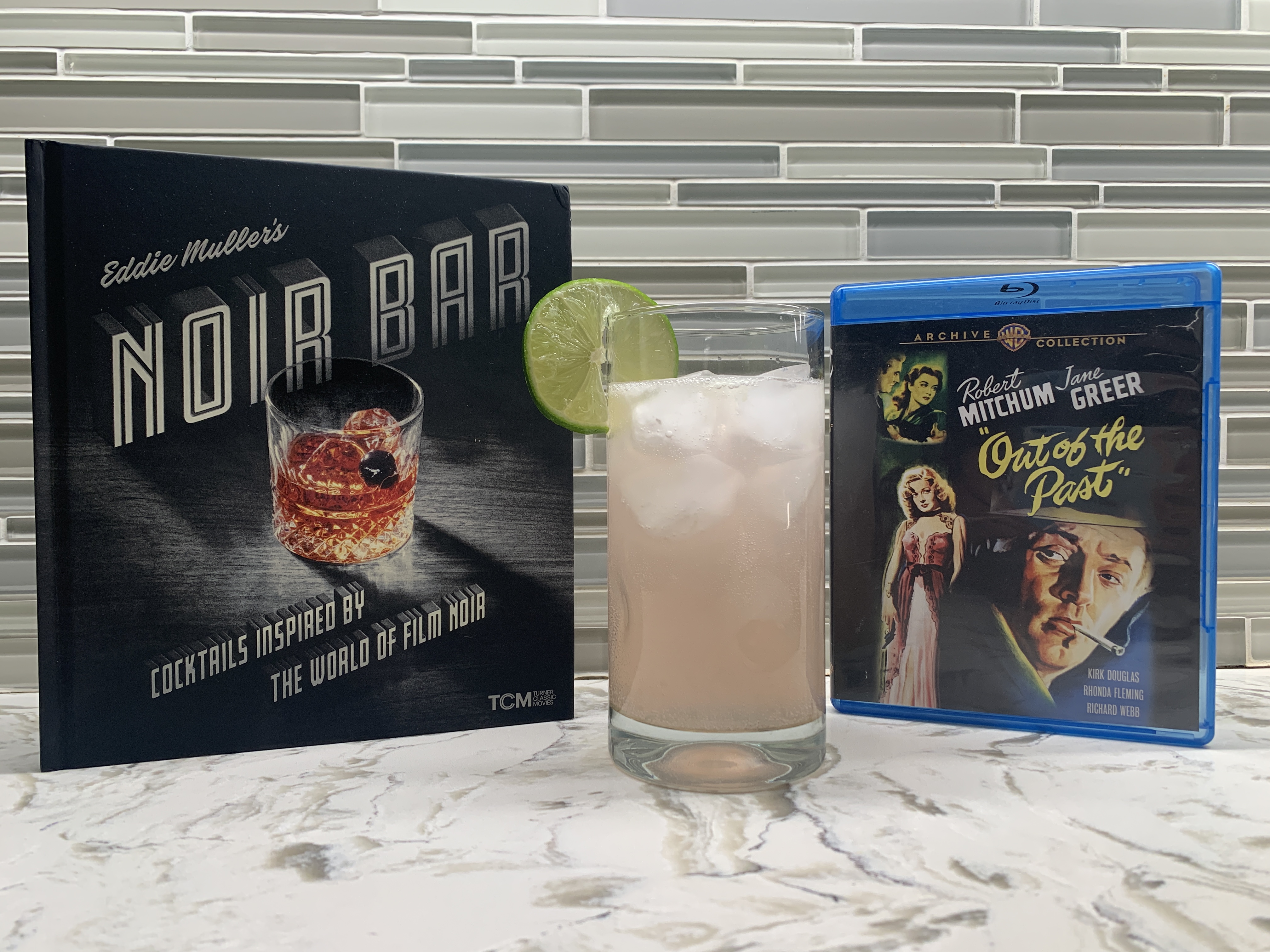
“Noir Bar offers a booze-based excursion through America’s most popular film genre, pairing easy-to-master recipes with the kind of behind-the-scenes anecdotes I like to include in my film intros and books.... This book is designed to be a drinking companion for anyone taking a deep dive into the glamorous and gritty world of noir.” — Eddie Muller
Cocktails and film noir make for a perfect pair in TCM host Eddie Muller's latest book: Noir Bar. Presented in alphabetical order, Noir Bar features 50 different films, each with a cocktail recipe to accompany it. Muller's curation of titles is as exciting as the cocktails he picks for each. The recipes were carefully selected by Muller—who is both the Czar of Noir and an experienced mixologist—to tie into the movie. The connection between noir and cocktail can be as simple as a reference to the title, protagonist or one of the actors. Some are thematic based on elements of the story. And there are numerous Eddie Muller originals. As someone who loves both film noir and cocktails, I had fun reading how Muller ties the cocktail to the movie and his reasoning behind each choice.
Here are some of my favorite film noir and cocktail pairings:
The Blue Gardenia (1953) — The Pearl Diver — This is a hat tip to the Tiki cocktail that Raymond Burr's character buys for Anne Baxter in order to get her intoxicated. Not many cocktails in the book have a direct connection
D.O.A. (1949) — The Last Word — The name is a reference to the protagonist's plight to get the "last word" on his murder. The cocktail recipe ingredients put together look reminiscent of the luminous poison from the film.
Hell’s Half Acre (1954) — Mai Tai — This film noir takes place in and was filmed on location in Hawaii. As someone who has enjoyed many a Mai Tai in Oahu, I appreciated Muller's tips on how to make a quality Mai Tai at home.
Odds Against Tomorrow (1959) — Johnny & Earle — Named after Robert Ryan and Harry Belafonte’s characters, this Eddie Muller original is probably the most clever cocktails in the whole book. He writes: “My mixology strategy here is obvious and symbolic—like the end of the movie. Two base spirits that rarely engage with each other are unexpectedly combined: Jamaican dark rum… and Southern Comfort… In the spirit of the story, my formula calls for fifty-fifty use of the two spirits…The bitters and the Allspice Dram smooth things out between two headstrong leads.”
Pickup on South Street (1953) — Bloody Mary — Eddie Muller prides himself on his signature recipe and this cocktail happens to be director Samuel Fuller's drink of choice.
Suspense (1946) — Belita — This frozen cocktail is named after the film's star Belita and is a hat tip to her career as an ice skater.
And of course I had to make the Out of the Past (1947) Paloma. In the book Muller writes,
"this [is a] humble concoction of tequila, lime, and grapefruit soda... Mitchum, of course, would have waved off grapefruit soda in his tequila. Granted. This one's for Jane [Greer]."
I've had Palomas in the past but have never made one at home. I'm not terribly experienced when it comes to crafting cocktails. I appreciated Noir Bar's front matter which includes Muller's introductions on spirits, garnishes and tools to have on hand as well as a guide to basic cocktail making techniques. And for those of you who love to look up old cocktail recipes and are often dismayed by how many of them contain egg whites, fear not because this book only has one such recipe!
The mix of titles include some of the most famous entries into the film noir canon as well as some obscure titles I've never heard of—and everything in between. Two of my favorites, Double Indemnity (1944) and The Postman Always Rings Twice (1946), were missing but that didn't take away from my enjoyment of the book.
Each film noir has a 4-6 page entry complete with a brief foray into the film's history, an explanation of the cocktail pairing, a recipe and some images from the film. Some of the cocktails are presented with a stylized photograph that has a sort of hazy 1980s neo-noir vibe to it that gave me a twinge of nostalgia. The book is a nice compact size but because of its binding and dark matte gloss pages, I do suggest placing it in a cookbook holder for reading and reference purposes if you can. I would not recommend this for someone who abstains from alcohol because the book leans heavily on the cocktail related content. They are not sections you can just skip.
Interior spread courtesy of Running Press. Champagne Cocktail to accompany Sunset Blvd. (1951).
Noir Bar is the perfect companion for film noir enthusiasts who enjoy a well-made cocktail.
Don't forget to drink responsibly!
Thank you to Running Press for sending me a copy of Noir Bar to review!
It's my honor to announce that the 2023 #ClassicFilmReading Challenge is now live!
Every year I host this challenge to encourage you to read and review six classic film books this summer/winter (depending on which hemisphere you live on).
If you don't think you could read and review six books but could review one or two, I encourage you to still join! It's fun to participate even if you don't complete the challenge.
If you do finish all six books then you:
1) get bragging rights
2) are automatically entered into a giveaway to win a Kino Lorber Blu-ray or DVD of your choice. Open internationally!
I encourage you to participate even if you don't think you'll read all 6 books. All readers are welcome.
Throughout the challenge I'll be sharing review round-ups here on the blog and on my Twitter @RaquelStecher—and possibly elsewhere if Twitter goes bust. Make sure you use the official hashtag #classicfilmreading when sharing your reviews. And feel free to share your #classicfilmreading stack to showcase what you plan to you plan to read.
Review 6 and be automatically entered to win a prize.
Please use the review link form to submit your reading stack too!
Challenge runs from May 20th until September 15th, 2023. Sign-up before July 15th, 2023.
All of the details of the challenge are on the official page including the sign up form, the book review submission form, rules, deadlines and what counts as a classic film book.