Friday, July 1, 2022

Lana: The Lady, The Legend, The Truth by Lana Turner

Lana: The Lady, The Legend, The Truth
by Lana Turner
Dean Street Press
250 pages
Paperback ISBN: 9781914150791
Originally published 1982
New edition October 2021


This review was originally published at the Classic Film Collective Patreon in May 2022.


“Nobody put a gun to my head to get me to write this book. I did it for two reasons: to set the record straight about me, so that all the lies could be answered by the truth, and because the timing was right. “ — Lana Turner

Lana Turner was the epitome of a movie star. With her perfectly coiffed blonde hair, an enviable wardrobe of designer gowns, furs and jewels and her sultry stare, Turner's adoring fans worshipped her. Over the years she evolved with her roles from being the sweater girl in They Won't Forget (1937), the femme fatale in The Postman Always Rings Twice (1946) and the queen of soaps in Peyton Place (1957) and Imitation of Life (1959). She wasn't always taken seriously as an actress and had to constantly prove her worth. After 5 decades of being in the business, she had over 50 movies to her name and a sole Academy Award nomination. Along with her success were also many personal troubles. She endured family tragedies, seven failed marriages and a scandal involving her daughter Cheryl and her mobster boyfriend Johnny Stompanato. Everyone seemed to have an opinion about Lana Turner and rumors would often spread like wildfire. In 1982, Turner decided to take matters into her own hands and tell her side of the story.

"Like many of the stars contracted into the old studio system, Lana was at the mercy of public opinion, which dictated every aspect of her life—including whom she could marry and have children with. And her story was not a Hollywood dream. There were many nightmares and heartbreaking tragedies she had to endure; which were then turned into fodder for public consumption.” — TCM host Alicia Malone

Lana: The Lady, The Legend, The Truth is an emotional memoir about a woman who lived to love but fell victim to the trappings of the Hollywood studio system. Like many movie star memoirs, you have to take this one with a grain of salt because it's clear that Turner wore her heart on her sleeve. The memoir is filled with candid tales of love and loss, of triumph and failures. It's a personal memoir but was also a way for Turner to protect her image and her legacy. 

Turner had developed a reputation as a glamorous movie star who was demanding on set. Reading between the lines, I see a woman who may have been temperamental but was also a shrewd business woman who knew her worth. She was a woman driven by emotion and instinct and built a life and career by a combination of her own rules and ones that were well established in the entertainment industry.

In the memoir, Lana Turner discusses many of her films and offers a little behind-the-scenes information on most of them. She only discusses her process a couple of times and focuses more on the people she worked with rather than her craft. Every single one of her seven marriages is discussed at length. It's clear that these men were emotionally volatile and were drawn to Turner's beauty, fame and financial success. There are also devastating stories about Turner's suicide attempt, her abortions, her stillborn births, her failed love affairs with Greg Bautzer and Tyrone Power and a few hints at a drinking problem. About three chapters are devoted to Johnny Stompanato, the events leading up to her daughter Cheryl Crane killing him in self-defense and the aftermath. Turner lacks some self-awareness at certain points but then in others she recognizes her shortcomings and also the struggles of being a women in a strict patriarchal society. The biggest takeaway about her many romances is that if the expectation had not been that she marry to keep up appearances, her husbands would have remained lovers instead.

Readers will learn more about Lana Turner as a woman rather than as a working actress. But there are still plenty of interesting old Hollywood tidbits from the book:

  • Lana Turner admitted to being naturally shy. Instead of butterflies she likened her nerves to "eagles, with flapping wings and tearing claws."
  • Her image as the sweater girl got Turner her start in Hollywood. But she quickly grew to dislike it.“That image clung to me for the rest of my career. I was the sexual promise, the object of desire. And as I matured, my facade did too, to an image of coolness and glamour—the movie star in diamonds, swathed in white mink.”
  • For Love Finds Andy Hardy (1938), she pleaded with producer Carey Wilson not to put her in a sweater. She wore a bathing suit instead.
  • She had a congenital condition, Rh blood factor, which prevented her from taking on roles in films like Mogambo (1953) which were shot in "exotic" locations.
  • She met husband #1 Artie Shaw and husband #5 Frederick May on the set of Dancing Co-Ed (1939).
  • She claims to have become the highest paid actress in the world in early 1945.
  • Turner had this to say about the remake of The Postman Always Rings Twice "It always amazes me that when Hollywood makes a really good movie, and some producer gets the bright idea to remake it, he comes up with something inferior to the original.”
  • She refused to star in A Life of Her Own (1950) with Wendell Corey. She fought with Dore Schary to get him off the picture (not because she didn't like him but because she didn't think he'd make a good co-star). Ray Milland was cast instead.
  • Despite the still recent Stompanato scandal, producer Ross Hunter still wanted her for Imitation of Life (1959).
  • Turner was going to star in Anatomy of a Murder (1959). At that point in her career she was fastidious about her look. Every detail from her hair, makeup and clothes had to be just perfect. When she made demands about her wardrobe, director Otto Preminger called to yell at her. Turner was not having it and asked her agent to pull her from the film.

Originally published in 1982, Dean Street Press released a new edition of Lana: The Lady, The Legend, The Truth in October of 2021 in paperback and e-book formats. It includes an introduction by TCM host and author Alicia Malone.

Thank you to Dean Street Press for a copy of the book to review!

Thursday, June 30, 2022

Come September (1961)

In my latest YouTube video I discuss the sex comedy classic Come September (1961) starring Rock Hudson, Gina Lollobrigida, Sandra Dee and Bobby Darin. Available on blu-ray from Kino Lorber!

Make sure you subscribe to my channel!


AmazonBarnes and Noble Deep DiscountKino Lorber


Thank you to Kino Lorber for sending me a copy to review!

Thursday, June 23, 2022

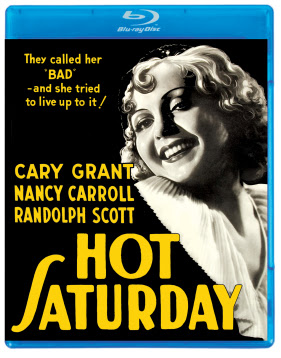
Hot Saturday (1932)


Bank clerk Ruth (Nancy Carroll) is a prized date for a "hot Saturday". Fellow bank employees Archie (Grady Sutton) and Connie (Edward Woods) have their eye on Ruth. But they're about to face major competition with rich playboy Romer (Cary Grant). He's invited the bank employees and all their friends for a weekend party at his lakeside mansion. It's an opportunity for Romer to get some extra time with the beautiful Ruth who attends the party with Connie. When Ruth rejects Connie's advances, he plants a false rumor that Ruth slept overnight at Romer's mansion. Aided by Ruth's archnemesis Eva (Lilian Bond), the rumor spreads like wildfire causing chaos. Her old love interest Bill (Randolph Scott) wants Ruth to marry him, much to the delight of her parents Ida (Jane Darwell) and Harry (William Collier Sr.) but what will happen once he finds out about Romer?

Directed by William A. Seiter, Hot Saturday (1932) is a vivacious jazz age drama that explores sexual politics and how rumor and scandal had devastating effects on women in society. This is Cary Grant's first leading role. It's an unusual characterization of a wealthy playboy. Romer is a genuine guy throughout. He has no machinations and his character doesn't have to overcome any moral failings to win the girl. Romer genuinely likes Ruth. This contracts with Connie, played by Edward Woods of Public Enemy fame, who isolates Ruth and comes close to sexually assaulting her. Nancy Carroll plays into the sweetheart role as a young middle class woman who gets caught up in a bad situation. Randolph Scott's character doesn't appear until half way through the movie. Bill has the appearance of being a nice guy but he ends up being just as toxic as the rest of them. It's interesting that both the playboy and the nice guy do not meet our expectations of their roles in the story. 

This film is a pre-code but it lacks some of the spice that comes with movies from that era, especially ones that deal directly with sex and morality. Carroll does the typical undressing scene that we've all witnessed in many a pre-code (she also partially undress her teen sister Annie, played by Rose Coghlan but the camera moves away so we don't see anything). Ruth sleeping with Romer is boldly suggested a few times throughout the story. She's also put in various precarious positions where she is vulnerable to sexual assault. Otherwise, it's a very tame pre-code film.

For those who love the era, Hot Saturday (1932) is a time capsule of early 1930s frivolities. Cary Grant's character Romer is driven by a chauffeur in this car with what almost looks like a rumble seat. Romer and his date sit with their laps covered by a partial hood which the chauffeur has to lift it up to let them out. (If anyone has more details on this car please let me know!). It's fascinating to look at but seems quite dangerous. At Romer's lakeside mansion party, he has a custom made hot dog/milkshake cart which is wheeled around the party to serve the guests. Carroll wears a variety of fun outfits including cloche hats and secretary style blouses and dresses.

Hot Saturday (1932) is available on Blu-ray from Kino Lorber. It includes subtitles in English, a reversible cover (see both sides below) and commentary from film historian Lee Gambin. The commentary was really fascinating. There is a lot of cultural context given and some really interesting insights into how the film portrays the societal mores and gender politics of the time. There were times I didn't agree with Gambin's perspective. He notes that Edward Woods comes off as a good guy in the role of Connie and then he takes an unexpectedly dark turn. As a woman I knew from the very first scene that Connie was up to no good so his character's story arc was no surprise. This is definitely a movie that women and men will interpret differently.


Thank you to Kino Lorber for sending me Hot Saturday (1932) for review!

Thursday, June 2, 2022

Camera Man: Buster Keaton by Dana Stevens


Camera Man
Buster Keaton, The Dawn of Cinema, and the Invention of the 20th Century 
By Dana Stevens
Atria Books
Hardcover ISBN: 9781501134197
432 pages
January 2022


“I think I have had the happiest and luckiest of lives. It would be ridiculous of me to complain… I count the years of defeat and grief and disappointment, and their percentage is so minute that it continually surprises and delights me.” — Buster Keaton

You'd be hard-pressed to find a more beloved figure from film history than Buster Keaton. He's wowed generations of moviegoers, some born several decades after his death in 1966, with his physical comedy and incredible stunt work. And he did it all with a straight face. Who can forget the house frame falling over Keaton in Steamboat Bill Jr. (1928), the death-defying stunts in The General (1926), Keaton running over train cars and onto a water tower in Sherlock Jr. (1924) or the epic chase scenes in Seven Chances (1925)? He did it all himself, no stuntman needed and made it look effortless. Keaton was also a pioneer in filmmaking. He thrived in the era before studios took over Hollywood. With his years of vaudeville training, he knew what audiences liked and developed that on a bigger scale for moviegoers. With the birth of cinema, he learned as he went, preferring to work independently and often writing, "choreographing" and directing his own feature films and shorts. Today Keaton's work is appreciated by many, even those who are new to classic movies. You'll hear those who are normally adamantly against watching black-and-white movies from the past being open and willing to watching Keaton perform his magic on screen.

Film critic Dana Stevens offers a look at Keaton's life and career in her book Camera Man: Buster Keaton, The Dawn of Cinema, and the Invention of the 20th Century. This is a life-and-times style book rather than a traditional biography. And what I mean by that is the book offers the reader equal parts biography and cultural history which places its subject, in this case Buster Keaton, in context with the eras they lived through. You won't get a play-by-play on everything that happened in Keaton's life and career. Instead, Stevens offers a look at Keaton through a cultural history lens and readers with reap the rewards from all the historical context.

The chapters are thematic essays that follow the course of Keaton's life chronologically but each focus on a particular subject with a couple of context points. Some of these include women filmmakers, child cruelty regulations, the birth of radio, film and television, movie magazines, collegiate culture, racism, indie filmmaking vs. Hollywood studios, etc. There is also in-depth biographical information on key figures from Keaton's life and career including Keaton's three wives, Roscoe Arbuckle, Robert Sherwood, F. Scott Fitzgerald, Louis B. Mayer, Irving Thalberg, Charlie Chaplin and more. These context points make for some illuminating reading and really help readers understand Keaton's world.

Stevens is a fantastic writer and I kept stopping to write down a quote I liked. Here are a few:

“For Keaton, every potential home is a space of danger and transformation; no facade stays standing for long… The ephemerality of the built world reveals the foundational homelessness of Buster’s character, whose defining trait is his ability to move through chaos while remaining miraculously unperturbed.”

“The Hollywood economy was large enough that Wall Street, another institution that rose to new heights of power and cultural influence in the 1920s, had started to play a key role in the financial and creative decisions of the top movie moguls…the big banks of the East Coast, where the money side of the business was still based, got skittish about lending large sums to small studios with spotty box-office records. To get back their investment, they needed a reliable flow of commercial hits.”

“Buster Keaton was ahead of his time in many ways but when it came to the ambient cultural racism of the Jim Crow era, he was unfortunately very much a product of it.” 
"Some accounts of Keaton’s late life—the ones that want to frame him as a tragic figure permanently destroyed by Hollywood—present his time performing with the circus as some sort of comedown… in fact, he held the prize second-act slot at one of Europe’s most prestigious and innovative circuses…”

If you're a fan of Buster Keaton and love cultural history, then Camera Man is a must read. 


Note: For those who will want a more traditional biography, author James Curtis' book Buster Keaton: A Filmmaker's Life also came out this year.


This is my first review for the 2022 Classic Film Reading Challenge. 


Thank you to Atria Books for sending me Camera Man for review!

Popular Posts

 Twitter   Instagram   Facebook